
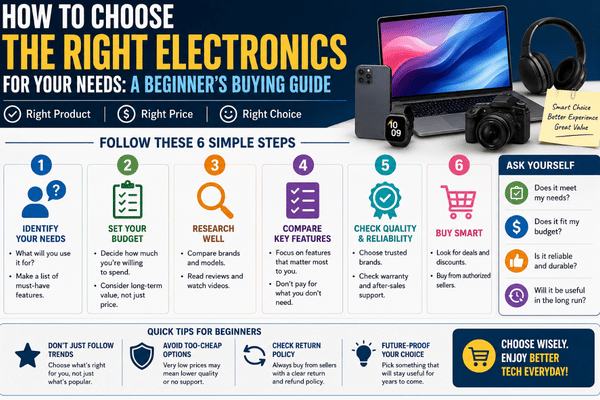
Shopping for electronics can be exciting, but it can also feel overwhelming. With countless brands, models, specifications, and price ranges to choose from, it’s easy to end up with a product that doesn’t quite meet your needs.
Whether you’re buying a new smartphone, laptop, television, headphones, tablet, smartwatch, or other electronic device, making an informed decision can save you money, reduce frustration, and ensure you get the best value for your investment.
This beginner’s guide will walk you through the key factors to consider before purchasing electronics, helping you choose products that fit your lifestyle, budget, and long-term needs.
1. Identify Your Needs Before You Buy
The first step is to determine why you need the device. Buying electronics based solely on advertisements or trends can lead to unnecessary spending.
Ask yourself:
- What will I use this device for?
- How often will I use it?
- Which features are essential?
- Which features are optional?
- How long do I expect the device to last?
For example:
Students
May prioritize affordability, portability, long battery life, and reliable performance for studying and online classes.
Professionals
May need faster processors, larger storage, and multitasking capabilities for productivity.
Gamers
Should focus on graphics performance, refresh rates, cooling systems, and sufficient memory.
Casual Users
May only need a device for web browsing, social media, video streaming, and communication.
Understanding your needs prevents overspending on features you may never use.
2. Set a Realistic Budget
Electronics are available at a wide range of price points. Setting a budget before you start shopping helps narrow your options and reduces impulse purchases.
Remember that the lowest price doesn’t always offer the best value. A slightly more expensive product with better durability, warranty coverage, and performance can save money over time by lasting longer and requiring fewer repairs or replacements.
When planning your budget, also consider:
- Accessories
- Protective cases
- Screen protectors
- Chargers
- Cables
- Extended warranties, if desired
3. Learn the Basic Specifications
Technical specifications can seem confusing, but understanding a few key terms can make shopping much easier.
Processor
The processor acts as the brain of the device. Faster processors generally provide smoother performance, especially when multitasking or running demanding applications.
RAM (Memory)
RAM determines how efficiently a device can handle multiple tasks at once.
As a general guide:
- Basic users: 4GB–8GB
- Everyday users: 8GB–16GB
- Professionals and gamers: 16GB or more
Storage
Storage determines how many apps, documents, photos, and videos your device can hold.
Options typically include:
- 128GB
- 256GB
- 512GB
- 1TB or more
If you store many files or install large applications, choose a higher storage capacity.
Battery Life
A device with long battery life is especially important if you travel frequently, work remotely, or spend long hours away from power outlets.
Display
Pay attention to:
- Screen size
- Resolution
- Brightness
- Color accuracy
- Refresh rate
A quality display improves both productivity and entertainment.
4. Compare Multiple Brands
Well-known brands often have strong reputations for quality and customer support, but newer or less familiar brands may also offer excellent value.
Instead of focusing only on brand names, compare:
- Features
- Performance
- Warranty
- Customer reviews
- Price
- Software support
- Build quality
Evaluate products based on your needs rather than popularity alone.
5. Read Customer Reviews
Customer reviews provide valuable real-world insights that product descriptions may not include.
Look for feedback about:
- Performance
- Durability
- Battery life
- Ease of use
- Build quality
- Customer service
- Common issues
Pay attention to recurring comments, whether positive or negative, as they often highlight consistent strengths or weaknesses.
6. Check Compatibility
Before purchasing electronics, ensure they are compatible with your existing devices.
Consider compatibility with:
- Smartphones
- Laptops
- Tablets
- Operating systems
- Chargers
- Wireless accessories
- Smart home devices
Buying compatible products helps avoid unnecessary adapters or additional purchases.
7. Understand the Warranty
A warranty can protect your investment if something goes wrong.
Before buying, check:
- Warranty duration
- What is covered
- Repair process
- Replacement policy
- Availability of service centers
Reliable warranty coverage provides added confidence in your purchase.
8. Consider Future Needs
Technology evolves quickly, so it’s wise to think ahead.
For example:
- Will you need more storage in the future?
- Will software updates continue to be supported?
- Will the device remain capable as your needs grow?
Choosing a product with room for future use can extend its lifespan and delay the need for an upgrade.
9. Shop with Trusted Retailers
Where you buy your electronics matters just as much as what you buy.
A trusted retailer offers:
- Genuine products
- Transparent pricing
- Reliable customer support
- Secure payment options
- Clear return policies
- Authentic warranties
Shopping from reputable stores helps reduce the risk of counterfeit or defective products.
10. Don’t Be Swayed by Marketing Alone
Advertisements often highlight impressive features, but not every feature will be useful to every buyer.
Instead of chasing the latest trends, focus on what will genuinely improve your daily life.
Ask yourself:
- Will I actually use this feature?
- Is it worth the extra cost?
- Does it solve a real problem?
Making practical decisions often leads to greater satisfaction with your purchase.
Common Mistakes to Avoid
Many first-time buyers make avoidable mistakes. Here are a few to watch out for:
- Buying the cheapest option without considering quality
- Ignoring customer reviews
- Overlooking warranty information
- Choosing features you don’t need
- Failing to compare multiple products
- Forgetting to check compatibility
- Not considering future storage or performance needs
Avoiding these mistakes can save you money and frustration.
Final Thoughts
Choosing the right electronics doesn’t have to be complicated. By understanding your needs, setting a budget, learning basic specifications, comparing products, and shopping from trusted retailers, you can make confident decisions that provide lasting value.
At Project Axiom Digital, we’re committed to helping you find reliable electronics and accessories that suit your lifestyle and budget. We offer carefully selected products designed to deliver quality, performance, and peace of mind.
Whether you’re upgrading your home office, replacing an old device, or purchasing your very first gadget, taking the time to make an informed choice will help you enjoy your technology for years to come.
Browse our collection today and discover electronics that combine innovation, reliability, and exceptional value.