
Product Development
By Onyemalik
Categories: product development
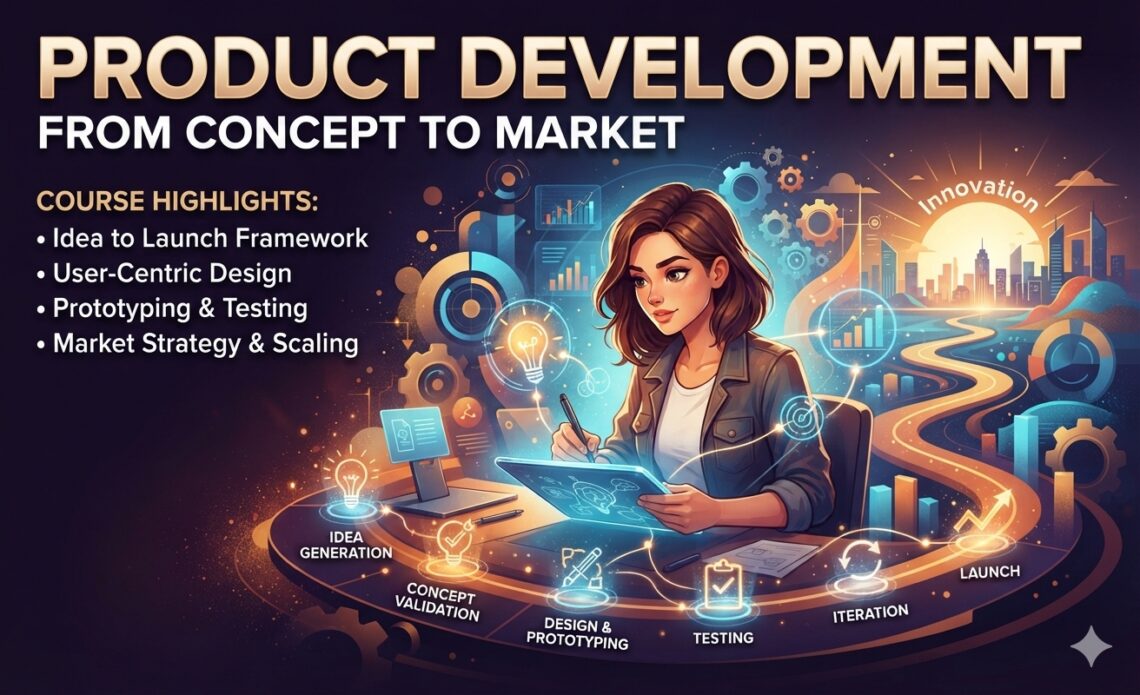
About Course
Course Content
MODULE 1: Foundations of Product Development
Before diving into the exciting world of creating products, it is important to understand the foundations that make successful products possible. Every great product—whether it is a smartphone, a mobile app, an online course, a piece of furniture, or even a service—starts with a simple idea. However, turning that idea into something people are willing to buy requires careful planning, research, creativity, and a clear understanding of customer needs.
In this module, you will learn the basic concepts and principles of product development. You will discover what product development is, why it is important to businesses and entrepreneurs, and how successful companies create products that solve real problems. You will also learn how to identify customer needs, conduct market research, generate innovative product ideas, and evaluate those ideas to choose the ones with the greatest potential for success.
This module serves as the foundation for the rest of the course. The knowledge and skills you gain here will help you make informed decisions as you move through the later stages of planning, designing, building, testing, launching, and improving products.
Learning Objectives
By the end of this module, you should be able to:
Define product development and explain its importance.
Describe the stages of the product development lifecycle.
Identify customer needs, wants, and pain points.
Conduct basic market research to understand customers and competitors.
Generate creative product ideas using proven techniques.
Evaluate product ideas based on market demand, feasibility, profitability, and risk.
Select a product idea with strong potential for development.
What You Will Learn in This Module
Lesson 1: Introduction to Product Development
Understand what product development is, why it matters, the different types of products, the product development lifecycle, and the characteristics of successful products.
Lesson 2: Understanding Customer Needs
Learn how to identify customer problems, recognize pain points, distinguish between wants and needs, create customer personas, and gather valuable customer insights.
Lesson 3: Market Research Fundamentals
Explore the importance of market research, learn the difference between primary and secondary research, analyze competitors, and identify industry trends.
Lesson 4: Generating Product Ideas
Discover practical brainstorming techniques, design thinking principles, innovation methods, and how to develop creative solutions to real customer problems.
Lesson 5: Selecting the Right Product Idea
Learn how to evaluate ideas using feasibility studies, market demand, profitability analysis, and risk assessment to choose the best product for development.
Why This Module Matters
Many products fail not because they are poorly made, but because they are built without understanding the customer or the market. Successful product development begins with asking the right questions:
What problem does this product solve?
Who needs this product?
Is there enough demand?
Can it be developed profitably?
How is it different from competing products?
By mastering the concepts in this module, you will develop the mindset and skills needed to build products that meet real customer needs and have a greater chance of succeeding in today's competitive marketplace.
Let's begin your journey into product development by exploring how great ideas become products that create value for customers and businesses alike.
-
Lesson 1: Introduction to Product Development
-
Lesson Review Questions
-
Lesson 2: Understanding Customer Needs
-
Lesson Review Questions
-
Lesson 3: Market Research Fundamentals
-
Lesson Review Questions (True or False)
-
Lesson 4: Generating Product Ideas
-
Lesson Review Questions
-
Lesson 5: Selecting the Right Product Idea
-
Lesson Review Questions
Module 2: Product Planning and Design
Module Introduction
Welcome to Module 2: Product Planning and Design.
Now that you have learned how to identify customer needs, conduct market research, generate product ideas, and select the best product idea, it is time to transform that idea into a well-planned product. A great product does not happen by chance—it is carefully planned, designed, and developed with the customer in mind.
Many products fail not because the idea was bad, but because the planning and design process was weak. Successful companies spend time understanding what features customers truly need, designing products that are easy to use, and testing their ideas before investing significant time and money in full production. This reduces risks, saves costs, and increases the chances of creating a product that customers will buy and recommend.
In this module, you will learn how to build a strong foundation for your product. You will discover how to define clear product goals, prioritize important features, apply customer-centered design principles, create prototypes, and develop a Minimum Viable Product (MVP). These are essential skills used by successful startups, entrepreneurs, and product managers around the world.
By the end of this module, you will have a structured product plan and a prototype or MVP concept that can be tested with real users before moving into full product development.
What You Will Learn
By the end of this module, you will be able to:
Develop a clear product vision and strategy.
Define product goals and create a practical product roadmap.
Identify and prioritize the most important product features.
Apply user-centered design principles to improve customer experience.
Create simple prototypes to visualize and test product ideas.
Understand the purpose and benefits of a Minimum Viable Product (MVP).
Prepare your product for development and customer validation.
Why This Module Matters
Imagine building a house without a blueprint. You might spend a lot of money, only to discover that important rooms are missing or the structure is unstable. Product development works the same way. Without proper planning and design, you risk creating a product that doesn't solve the customer's problem or meet market expectations.
This module serves as the blueprint for your product. The knowledge and skills you gain here will help you make informed decisions, avoid costly mistakes, and build products that are functional, valuable, and ready for successful development and launch.
Let's begin by learning how to create a solid product plan and strategy that will guide every stage of your product development journey.
-
Lesson 1 – Product Planning and Strategy
-
Lesson Questions
-
Lesson 2 – Defining Product Features
-
Lesson Questions
-
Lesson 3 – Product Design Principles
-
True or False Questions
-
Lesson 4 – Creating Product Prototypes
-
Multiple Choice Questions
-
Lesson 5 – Building a Minimum Viable Product (MVP)
-
Lesson Questions
Module 3: Product Development and Testing
Module Introduction
Welcome to Module 3: Product Development and Testing.
In the previous module, you learned how to plan your product, define important features, apply design principles, create prototypes, and develop a Minimum Viable Product (MVP). Now that you have a clear product concept and a tested idea, the next step is turning that concept into a functional product.
Product development is the stage where ideas become reality. It involves building the actual product, managing the development process, ensuring quality, testing performance, and improving the product based on real user experiences. A well-developed product is not only expected to work properly but also needs to deliver value, provide a great user experience, and meet customer expectations.
Testing is one of the most important stages of product development. Even the best ideas can fail if they contain errors, do not perform as expected, or fail to solve customer problems. Through proper testing and customer feedback, businesses can identify weaknesses, make improvements, and create products that are reliable and ready for the market.
In this module, you will learn the practical process of developing products, conducting different types of tests, collecting customer feedback, improving product quality, and preparing your product for successful launch.
What You Will Learn
By the end of this module, you will be able to:
Understand the product development process from concept to completion.
Choose appropriate development approaches for different types of products.
Manage product development activities and timelines.
Apply different product testing methods.
Collect and analyze customer feedback effectively.
Improve products based on testing results.
Understand the importance of branding and packaging before launch.
Why This Module Matters
Many products fail because businesses rush from an idea directly into the market without proper development and testing. A product may have a great concept but still disappoint customers because of poor quality, usability problems, or missing features.
Think of product development like building a bridge. The design may look excellent on paper, but before people can safely use it, the bridge must be constructed properly, inspected, and tested. The same principle applies to products. Development and testing ensure that your product is strong, reliable, and ready to serve customers.
This module will give you the practical knowledge needed to transform your product idea into a working solution that customers can trust and value.
Let's begin by exploring how successful products are developed from an idea into a market-ready solution.
-
Lesson 1 – Developing the Product
-
Lesson Questions
-
Lesson 2 – Product Testing Methods
-
Lesson Questions
-
Lesson 3 – Collecting Customer Feedback
-
True or False Questions
-
Lesson 4 – Improving the Product
-
Short Answer Questions
-
Lesson 5 – Product Branding and Packaging
-
Multiple Choice Questions
Module 4: Production, Pricing, and Distribution
Module Introduction
Welcome to Module 4: Production, Pricing, and Distribution.
In the previous module, you learned how to develop, test, improve, and brand your product. At this stage, your product is almost ready for the market. However, before customers can purchase it, you must know how to produce it efficiently, determine the right selling price, maintain quality, and deliver it to customers successfully.
A great product can still fail if it is too expensive, poorly manufactured, or difficult for customers to access. Successful businesses carefully plan how products will be produced, priced, stored, and distributed to ensure profitability and customer satisfaction.
This module focuses on the operational side of product development. You will learn how to prepare products for production, calculate production costs, choose effective pricing strategies, implement quality control measures, and develop efficient distribution systems. These are essential skills for entrepreneurs, product managers, manufacturers, and anyone involved in bringing products to market.
By mastering these concepts, you will be able to produce high-quality products at competitive prices while ensuring they reach customers efficiently and profitably.
What You Will Learn
By the end of this module, you will be able to:
Understand the product production process.
Prepare for manufacturing and production.
Calculate production costs accurately.
Apply different pricing strategies.
Implement effective quality control practices.
Understand product distribution and logistics.
Develop efficient supply chain management strategies.
Why This Module Matters
Imagine creating an excellent product that customers love, but your production costs are too high, your pricing is unprofitable, or your products never reach customers on time. Even the best products can fail without effective production, pricing, and distribution strategies.
Think of this module as the bridge between product development and the marketplace. It ensures that your product is manufactured efficiently, priced appropriately, and delivered to customers in the right place and at the right time.
The knowledge you gain in this module will help you reduce costs, improve product quality, maximize profits, and build a reliable system for delivering value to your customers.
Let's begin by learning how to prepare products for efficient and successful production.
-
Lesson 1 – Preparing for Production
-
Lesson Questions
-
Lesson 2 – Product Costing
-
True or False Questions
-
Lesson 3 – Pricing Strategies
-
Short Answer Questions
-
Lesson 4 – Quality Control
-
True or False Questions
-
Lesson 5 – Distribution and Logistics
-
Short Answer Questions
Module 5: Product Launch and Marketing
Module Introduction
Welcome to Module 5: Product Launch and Marketing.
Congratulations! You have successfully planned, designed, developed, tested, produced, priced, and prepared your product for the market. Now comes one of the most exciting and important stages of the product development journey—launching your product and introducing it to customers.
No matter how innovative or high-quality a product is, it cannot succeed if people do not know it exists. A successful product launch creates awareness, generates interest, attracts customers, and drives sales. Effective marketing ensures that the right product reaches the right audience at the right time through the right channels.
Product launch and marketing involve much more than advertising. They include preparing for the launch, building a strong brand, positioning the product in the marketplace, developing marketing campaigns, selecting sales channels, and measuring product performance after launch. These activities help businesses create lasting relationships with customers and achieve long-term growth.
In this module, you will learn how to develop a successful product launch plan, build a strong product brand, create effective marketing strategies, increase sales, and evaluate product performance using key performance indicators (KPIs). These skills are essential for entrepreneurs, product managers, marketers, and business owners who want their products to succeed in competitive markets.
What You Will Learn
By the end of this module, you will be able to:
Plan and execute a successful product launch.
Build a strong product brand and market position.
Develop effective marketing strategies.
Select appropriate sales channels for different products.
Increase product sales and customer engagement.
Measure product performance using key performance indicators (KPIs).
Make data-driven decisions to improve marketing results.
Why This Module Matters
Many excellent products fail because they are poorly launched or marketed. Customers cannot buy products they have never heard about, and businesses cannot grow without attracting and retaining customers. A well-planned launch creates excitement, while effective marketing builds awareness, trust, and customer loyalty.
Think of your product as a newly opened store. Even if the store offers excellent products, customers will not visit unless they know where it is, what it offers, and why they should choose it over competitors. Marketing is the bridge that connects your product with your customers.
This module will equip you with practical knowledge and proven strategies to successfully introduce your product to the market, attract customers, increase sales, and build a strong brand that continues to grow over time.
Let's begin by learning how to prepare for a successful product launch.
-
Lesson 1 – Planning a Successful Product
-
Lesson Questions
-
Lesson 2 – Product Branding and Marketing Strategies
-
Multiple Choice Questions
-
Lesson 3 – Sales Strategies and Customer Engagement
-
Short Answer Questions
-
Lesson 4 – Monitoring Product Performance
-
True or False Questions
-
Lesson 5 – Product Life Cycle Management
-
Short Answer Questions
Product Growth and Lifecycle Management
Welcome to Module 6: Product Growth and Lifecycle Management.
Congratulations on reaching the final module of this course! You have learned how to identify customer needs, generate and evaluate product ideas, design and develop products, prepare for production, determine pricing, manage quality, distribute products, launch them successfully, and market them effectively. Now it is time to focus on how to sustain and grow your product after it has entered the market.
Launching a product is not the end of the product development journey—it is the beginning of a new phase. Successful businesses understand that products must continuously evolve to meet changing customer needs, adapt to market trends, and stay ahead of competitors. They regularly improve their products, manage risks, explore new opportunities for growth, and plan for the future.
In this module, you will learn how to manage a product throughout its life cycle, develop strategies for growing your product and business, encourage continuous innovation, identify and manage product-related risks, and apply everything you have learned by completing a practical capstone project.
These skills are essential for entrepreneurs, product managers, business owners, and anyone responsible for creating products that remain valuable, competitive, and profitable over time.
What You Will Learn
By the end of this module, you will be able to:
Understand the different stages of the Product Life Cycle.
Apply strategies to extend the life of a product.
Scale product growth by increasing production and expanding into new markets.
Drive continuous product innovation and improvement.
Identify, assess, and manage product-related risks.
Develop a complete product development plan.
Present a product concept with a practical go-to-market strategy.
Why This Module Matters
Many products fail not because they are poorly designed, but because businesses stop improving them after launch. Customer preferences change, new technologies emerge, and competitors continuously introduce better products. To remain successful, businesses must adapt, innovate, and make informed decisions throughout a product's life cycle.
This module equips you with the knowledge and practical skills needed to keep your products relevant, competitive, and profitable. You will also complete a capstone project that allows you to apply the entire product development process—from identifying an opportunity to presenting a market-ready product solution.
By the end of this module, you will have a complete understanding of the product development journey and the confidence to create, launch, grow, and manage successful products in today's competitive marketplace.
Let's begin by exploring how to effectively manage a product throughout its entire life cycle.
-
Lesson 1 – Managing the Product Lifecycle
-
Short Answer Questions
-
Lesson 2 – Product Innovation
-
Multiple Choice Questions
-
Lesson 3 – Scaling Product Growth
-
True or False Questions
-
Lesson 4 – Managing Product Risks
-
True or False Questions
-
Lesson 5 – Capstone Product Development Project
-
Short Answer Questions
Student Ratings & Reviews

No Review Yet